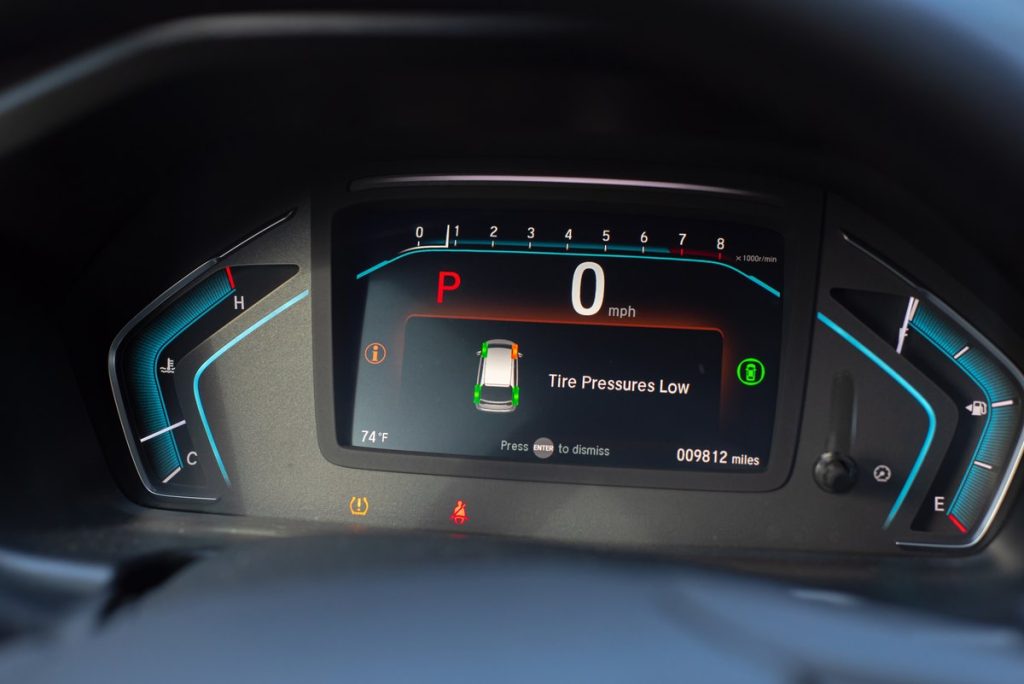
You walk out to the car on a cool October morning, start it up, and there’s that little orange horseshoe with an exclamation point glowing on the dash. You drove home just fine last night, so what happened?
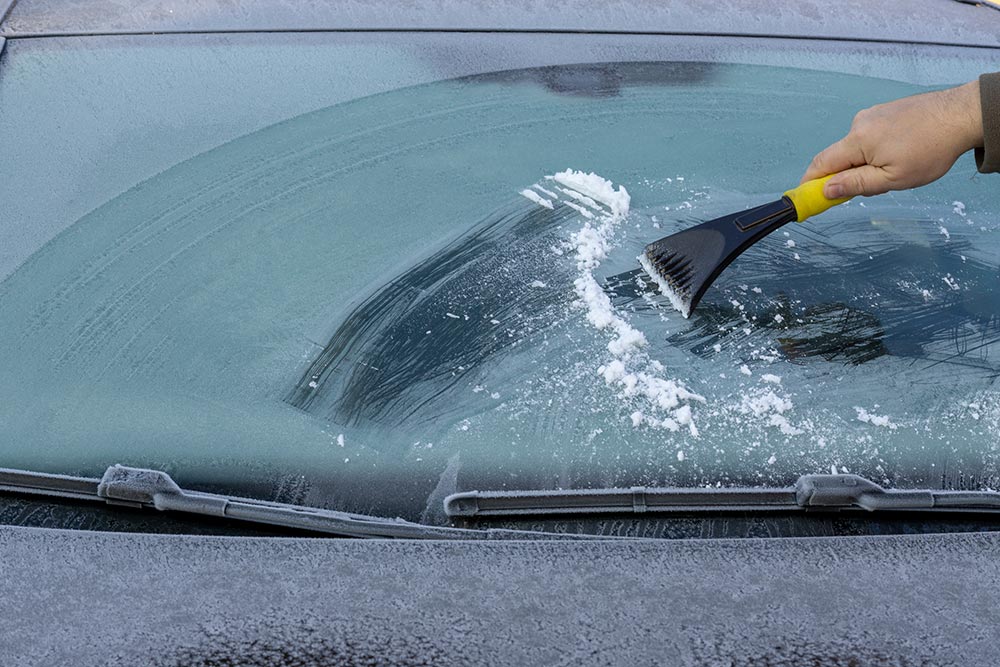
Most of the time, the weather happened. Air shrinks as it cools, and the air in your tires is no exception. A rough rule of thumb is that tire pressure drops about one pound for every ten degrees the temperature falls. When an afternoon in the 70s turns into a morning in the 40s, your tires can easily lose three or four pounds overnight without any leak at all. If they were already a little low, that’s enough to trip the warning light.
You may notice the light goes off after you’ve driven a few miles. That’s because driving warms the tires back up and the pressure rises again. It’s tempting to take that as a sign everything is fine, but it really means your tires are running low on cool mornings and need some air.
The right pressure for your car isn’t the number printed on the side of the tire. That number is the maximum the tire can safely hold. The one you want is on a sticker inside the driver’s door frame, and it’s best to check it in the morning before you’ve driven anywhere.
Running on underinflated tires matters more than most people think. The car doesn’t stop or handle as well, especially on wet leaves and rainy roads this time of year. Your gas mileage drops, and the tires wear out faster along the edges. A tire that’s very low can also overheat and fail on the highway.
If the light stays on even after you’ve added air, or one tire keeps losing pressure faster than the others, there’s likely something more going on. It could be a nail, a leaky valve stem, a bent wheel or a tire pressure sensor that’s failing. Those are worth having looked at rather than topping off the same tire every few days.
Exhaust Plus Auto Center can check your tires, find slow leaks and track down sensor problems. Give us a call at (931) 388-8411 or stop by 102 W 5th St in Columbia, Monday through Friday from 8 to 5.
Share this post: